
How Do You Know If You’re in Perimenopause?

(And Why So Many Women Don’t Realize They Are)
If you’ve been feeling anxious, exhausted, irritable, emotionally overwhelmed, gaining weight around your midsection, struggling to sleep, or just thinking…
“What is happening to me lately?”
There’s a very good chance you may be in perimenopause. And the truth is, most women don’t even realize it at first.
One of the biggest misconceptions I hear is:
“Perimenopause starts when your periods stop.”
Not exactly.
Menopause is technically one single day. The day you’ve gone 12 full months and a day without a period. After that, you’re considered postmenopausal.
Perimenopause, however, can start up to 10 years before menopause. Which means many women begin noticing symptoms in their late 30s and 40s without connecting the dots.
And honestly?
That’s part of why this season can feel so confusing.
Why Perimenopause Feels Like Such a Rollercoaster
Here’s what’s happening behind the scenes:
For years, your ovaries have been producing your hormones consistently during your reproductive years. But eventually, the ovaries begin slowing down, and your adrenal glands step in to help carry some of the hormonal load.
The adrenal glands also manage your stress hormones.
So now your body is trying to juggle:
stress
cortisol
hormone production
sleep regulation
blood sugar balance
energy
…all at the same time.
This is why women often notice they suddenly become far more sensitive to stress during midlife.
You might have handled stressful jobs, kids, and busy schedules for years, and suddenly it feels like your nervous system just can’t keep up anymore.
Your mind races at night.
You wake up exhausted.
Everything feels overwhelming.
Little things irritate you.
You feel emotionally stretched thin.
And no, you’re not “losing it.”
Your body is asking for support.
The First Hormone to Decline
One of the very first hormones to begin dropping in perimenopause is progesterone.
Progesterone is often called the “calming hormone” because it helps support relaxation, sleep, and mood stability.
So when progesterone begins declining, women commonly experience:
anxiety
irritability
poor sleep
mood swings
feeling overstimulated
irregular periods
Suddenly, your husband chewing too loudly feels like the most annoying sound you’ve ever heard.
Your kids asking normal questions feels overstimulating.
You feel frustrated with yourself because you know your reactions feel bigger than they used to.
This was actually one of my very first symptoms, too.
My First Sign Something Was Off
For me, one of the earliest signs was extremely heavy periods.
And I mean extremely heavy.
I remember waking up in the middle of the night confused and scared because things suddenly felt so abnormal for my body. I went to my doctor looking for answers, and after ultrasounds and biopsies ruled out anything serious, the recommendation was a uterine ablation procedure.
At the time, nobody explained:
“This is actually a very common perimenopause symptom.”
Nobody talked to me about progesterone.
Nobody explained hormonal shifts.
Nobody connected the dots.
And I know now that so many women experience this exact same frustration.
Estrogen Fluctuations Create Chaos
Because progesterone tips, you have an imbalance with your estrogen. Estrogen begins to fluctuate, and before it declines, it often swings wildly up and down.
This is where women may start experiencing:
headaches
brain fog
low mood
low libido
weight gain
anxiety
forgetfulness
emotional ups and downs
You walk into a room and forget why you’re there.
You lose words mid-sentence.
You reread emails three times.
You feel exhausted but wired at the same time.
And honestly? It can feel incredibly unsettling.
The Best Description of Perimenopause I Can Give You
Imagine you’re sitting peacefully at a calm acoustic concert. Everything feels soothing and predictable.
And then suddenly…
A mosh pit breaks out in the middle of the crowd.
That’s perimenopause.
One minute you feel fine.
The next minute your body, brain, moods, sleep, and stress levels feel chaotic and unpredictable.
It’s like your internal operating system suddenly changed without warning.
Common Signs of Perimenopause
Some of the most common symptoms women experience include:
anxiety out of nowhere
irritability and rage
poor sleep
exhaustion
brain fog
cycle changes
weight gain around the midsection
lower stress tolerance
loss of motivation
feeling disconnected from yourself
And here’s the important thing:
You do not need to have every symptom.
Every woman experiences this transition differently.
For example, I personally never had hot flashes, even though that’s the symptom everyone talks about.
Why Testing Hormones Can Be Tricky
One of the most frustrating things about perimenopause is that lab testing isn’t always straightforward.
Hormones fluctuate constantly during this stage, which means labs can sometimes look “normal” even when symptoms are very real.
That’s why symptoms matter so much.
And it’s also why working with a knowledgeable practitioner who truly understands women’s hormones can make such a difference.
What Actually Helps During Perimenopause
The good news?
There are absolutely things you can do to support your body during this transition.
And it doesn’t require punishing yourself with restriction, over-exercising, or trying to “push harder.”
In fact, that usually backfires in midlife.
Here are some of the foundational things that matter most:
Protect Your Nervous System
Stress management becomes critical during this stage.
This includes:
prioritizing sleep
saying no more often
slowing down (this is a BIG one)
creating calm
reducing overstimulation
giving your body recovery time
Your nervous system is not weak.
It’s overloaded.
Eat Enough Protein and Fiber
One of the biggest mistakes I see women make is undereating.
Women often think:
“I’m gaining weight, so I need to eat less.”
But under-eating can make symptoms worse.
Protein supports:
blood sugar stability
muscle health
mood
hormones
neurotransmitters like serotonin and dopamine (AKA: Happy messengers)
Fiber helps support:
digestion
detoxification
hormone balance
fullness
gut health
Build Muscle
Walking is wonderful.
But women in midlife also need strength training.
Muscle supports:
metabolism
insulin sensitivity
bone health
mood
hormones
healthy aging
And no, lifting weights will not make you bulky. Promise.
Perimenopause Is Not the End — It’s a Transition
I know this season can feel overwhelming.
But I truly believe perimenopause is not something we’re meant to fear.
It’s a transition.
A recalibration.
A season where your body is asking you to slow down, listen, nourish yourself differently, and care for yourself in a deeper way.
You are not crazy.
You are not lazy.
Your body is changing.
And with the right support, education, and lifestyle habits, you can feel better again.



Hi there, I’m Jenny

I’m a Board Certified Functional Medicine Health Coach, podcast host, wife, mom of two teens, and lover of nature, farmers' markets, and a really good cup of coffee. After struggling with weight gain, anxiety, low energy, and brain fog after turning 40, I discovered a simpler, more sustainable approach to health through functional medicine and lifestyle changes. Now, I help women over 40 navigate perimenopause with realistic strategies that support hormones, energy, mood, sleep, and confidence, so they can finally feel like themselves again.
Grab The Protein Fix Guide
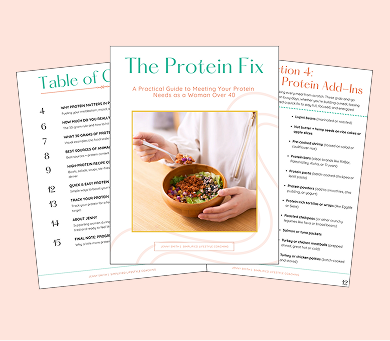
START FUELING YOUR BODY WITH WHAT IT ACTUALLY NEEDS AFTER 40.